Check conditions
Check weather and highway updates before long winter drives.
Seasonal safety
Winter routes can change quickly, especially around alpine passes, shaded roads, bridges, and early mornings.
Check your readiness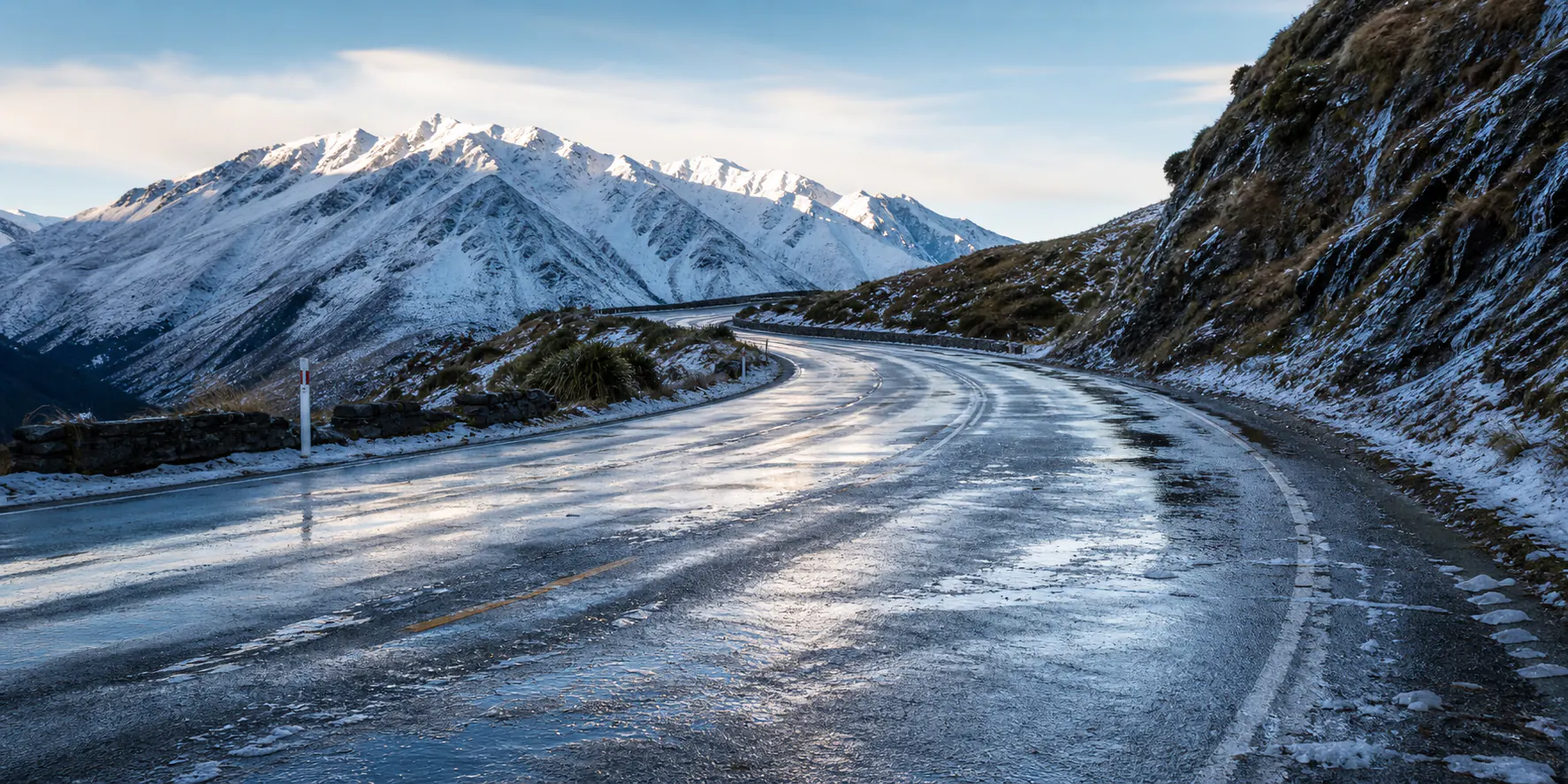
Check weather and highway updates before long winter drives.
Reduce speed before shaded patches, bridges, and bends where ice can form.
Avoid sudden braking, steering, or acceleration on slippery roads.
Quick rules
Common visitor mistakes
Practical driving example
On a clear winter morning, a shaded bend can still hold ice. Reduce speed before the shade, leave a bigger gap and make every input gentle through the bend.
Related interactive practice
Use the winter and rural-road scenarios to practise early speed reduction, safe following distance and calm decision-making.
Practise winter drivingOfficial source
Use NZ Transport Agency and road-condition information before every winter or alpine trip.
NZTA: driving on snow and iceWinter driving FAQ
It can form on cold, shaded or elevated roads, including bridges, even after a clear day.
Check current requirements for your route; some alpine roads may require them in winter.
Delay, reroute or stop. Reaching a destination later is safer than pushing beyond your skill or vehicle setup.